Articles by "Germany"
Showing posts with label Germany. Show all posts
This Blog is all about European Countries Education, Tourist places, Sports, and culture.
Germany is the birthplace of what we call ‘research universities’ – big places with ivory towers and libraries where new knowledge is produced every day. This university model has since covered the entire planet and is basically what most universities are set up for today: to produce knowledge and make new discoveries. Don’t you want to be in the place where all of that began?


Why Study in Germany:
Throughout Germany, you have a wide variety of subjects and careers to pursue. If you want to be at the forefront of engineering, technological advances, and scientific discovery, then Germany has several university options that can satisfy your interests. You’ll find that some of the smartest people on the planet come to Germany to introduce new ideas and establish technology companies. You’ll also notice a long, rich history of art, music, and literature all throughout Germany. You can enjoy a trip to the opera, visit a historic museum, and collect giant beer mugs, all in one day!


What to study in Germany:
Germany has Bachelor’s, Master’s and Ph.D. programmes in nearly every subject or field you can imagine, and students all over the world find degree programmes that appeal to them and offer a unique education. Here are some subjects you can find when you go attend a Germany university:

Major cities in Germany:
Germany is home to some of the biggest cities in the world, and each one has its own story to tell. Cities all over Germany are perfect for students and can offer you a great cultural life to enjoy time outside of your classes. Check out some of these cities and learn more about what it is like to study here:
1. Berlin 
4. Munich 

Which universities to attend in Germany:
You won’t have any trouble finding an excellent university to pursue your education in Germany. The whole country has plenty of options and places for you to search for your desired degree options.
Germany has different types of universities and institutions, offering classes that can apply to your specific needs. Whether they are those traditional research universities, universities of applied sciences (Fachhochschulen), or specialized art and music institutions, you can find the classes that fit your needs and interests best.


How to apply to universities in Germany:
If you’re hoping to be admitted to a university in Germany, follow these steps and make sure to have the right materials prepared for your application.
1. Have your graduating certificates (high school or university) ready to show, send, or scan. The application will typically call this an “Abitur.” You’ll want to double check that your degree is recognized by German universities.
2. You might have to take a written entrance examination
3. Make sure to know what the language requirements are, and whether you have to prove skills in German or English before enrolling in a degree programme.
4. Show how you performed as a student, and be sure to know what your Grade Point Average (GPA) was during your studies.
5. To help your chances of going to Germany, be sure to apply to more than one university!
6. Helpful ways to make sure you qualify for a Germany university
7. Take Preparation Courses: These kinds of courses enable degree-seeking students to get an extra educational boost just before they start their Master’s degree or other post-graduate degree programmes. Try a pre-M.B.A., pre-Law, or pre-Medicine programme, as well as any other foundation or preparation courses that will allow you to study in the degree programme of your choice.
8. Improve your English through an English-language prep course: If you’re attending a degree programme in Germany, you will sometimes need to prove that your language skills are good enough to participate in the classes and understand the lectures; some schools will require German, while others will require strong English skills. These courses will also prepare you for any of the English-language tests that universities require.

English-language tests:
Universities in Germany will want to see proof that you have good English-language skills so that you can easily succeed in their courses. Almost all German universities accept these official English exams:
1. IELTS
2. TOEFL
3. CAE


Source of this information:
This Blog is all about European Countries Education, Tourist places, Sports, and culture.
Preparing your student visa application is a lengthy and stressful process. You go through several procedures and at the end, you have no guarantee that you will be granted the visa. No matter how many documents you submit or how well you think your visa interview went, there is always a chance that the embassy will reject you. The application procedure to get to the point where you get a response from the embassy takes months. The first step is for you to decide that you want to study in Germany and identify universities which match your interests and where you think you have a higher probability of getting admitted.


Each university has their own requirements and procedures so you will have to prepare documents and applications for each one of them. If applications are required to be submitted through the German platform for international students or UNI-ASSIST, you might also have to pay application fees which add up to the expenses for the visa. After you submit your university applications comes the long wait. It might take months for universities to get back to you with an acceptance or rejection letter. If you are lucky enough, you will be admitted into at least one university.


Being admitted into a university is only the first half of the process. The most difficult part comes after when you have to apply for the visa. There are many agencies and consultants who for a fee will prepare your visa application documents and guide you through the procedure, or you can prepare everything on your own. Either way, you have to make sure that you have all the necessary documents and fulfill all requirements. In addition to the documents, you will also be required to open a blocked bank account (Sperrkonto) containing €8,640. Why this exact amount? Well, the cost of living per students in Germany is around €720 per month, which, when multiplied by 12 months gives the amount of €8,640. So in order to prove to the German Embassy that you can finance the cost of living for your first year, you will need to have this blocked bank account.


Afterward, you will need to pay application fees and finally make an interview appointment. If all goes well, after a few weeks of the interview, you will get a positive response and you will be on your way to studying in Germany.
For more details on the visa application procedure for Germany, head of our article here!
But what if the response is negative? What if your student visa application is rejected?
Do not lose hope! You can appeal to the embassy or you can resubmit your application. The wisest approach would be to prepare the application again and resubmit it. That is because the German Embassy will have a reason why they rejected you with the current application in the first place so there is little you can do to change their mind. You are most likely wondering why your application got rejected. You put so much effort into it and it still wasn’t enough. There might be several reasons why this happened, and if you are able to identify where your application went wrong, you have a better chance of improving it when you reapply.
Also, if you are in the process of preparing your application, you might also benefit from knowing what the reasons for visa rejections are.


Top reasons why your student visa application could get rejected in Germany:

1. Student's Finances Status: The German Embassy will not let anyone into their country so they can starve or not be able to pay rent. They need to ensure that you have a strong financial background so you can cover your living costs for the entire duration of your stay. So the first reason that they might reject your visa application is that they believe you do not have the financial means to finance yourself. Even if you opened the blocked bank account with €8,640 in it, you will need to have this sum of money for each year that you are studying. If the Embassy has looked at your financial statements and suspects that, for example, next year you will not have €8,640 in your bank account, they will reject you.

Student's Academic Qualifications: Germany’s education is regarded as one of the most difficult. They refuse to accept any student who does not have a good academic background and shows little potential for succeeding. You might have submitted your academic documents and you thought that they were fine, but if the Embassy does not believe that you can withstand the tough academic programs that Germany has, or if your academic records are not up to German standards, they will ultimately reject you.


Student's Language Skills: Sometimes it is difficult to communicate with people with whom you speak the same language and there is always the potential for misunderstandings. Imagine how difficult it is if you don’t speak the language to a level where you can effectively communicate! You might have attended German language courses and done ok on the examinations, but when you go to the interview you will have a chance to prove these skills. First of all, to apply for the Germany student visa you need at least a C2 level language proficiency level of German. In addition, you also need to be able to speak English. If your application does not prove that you have good language skills or if during the interview you do not demonstrate that you are proficient enough in German, the Embassy will reject your application. This is because it is highly important for you to be able to have a language level where you can understand and respond in German.

Student's Study Program selection: When applying for a Master’s program, most students apply for a field related to the one they had during their undergraduate studies. The rest might want to change careers or get different qualifications, so they go into a field where they do not have any academic background. If your undergraduate degree was in Fine Arts, and you are applying for a Master’s Degree in Engineering, your choice of fields will raise some eyebrows. The Embassy representatives will question your choice of study programmes and they might reject you on the grounds that you are inconsistent.


Student's Profile: Every developed country has a certain profile of people that they want to allow entrance in their country. Most of them want young and skilled people who can fill the vacant job positions that natives of the country cannot. They are always looking for people who have potential to improve the economic landscape of the country. Germany too is looking for young and skilled people. If you do not fit the age group or if your field of study is not required in the country or the particular state your university is in, the Embassy will have enough reason to reject you.

Student's interview: Interviews are always stressful! Visa interviews are twice as stressful as others. It is easy to become nervous and not say the right thing or trip on your words. That is why preparation is always necessary and important. The interviewers will ask you all sorts of questions, starting from your background and then they will test your knowledge of Germany and your field of study. If they sense that you are unprepared or even worse, you are giving incorrect answers, they will have reason enough to reject you.


Source of this information:
This Blog is all about European Countries Education, Tourist places, Sports, and culture.
This includes people who are going to visit the Federal Republic of Germany for Medical Purpose.


Required Documents for a Medical Treatment VISA:
1. Fully completed application form & declaration duly signed.
2. Two passport photographs. 
3. Valid national passport.
4. One copy of your passport’s data page. 


5. Confirmation letter from your health insurance stating coverage for emergency medical or hospitalization with a minimum of 30,000 Euros.
6. Flight reservation, rail tickets, others.
7. Personal covering letter with entire travel plan 
8. Leave letter of your company (if employed)
9. Certificate from a medical doctor confirming the need of specific medical treatment 
10. Certificate from a medical doctor confirming that necessary treatment can be provided an appointment is made 
11. Proof of advance payment of the treatment / financial arrangements with the medical doctor in Germany
12. Correspondence between the sending medical doctor and the receiving medical doctor
13. Proof of accommodation for your entire stay in the Schengen area
14. Proof of civil status: Marriage certificate, birth certificate of children, death certificate of spouse, ration card if applicable
15. Proof of financial status:
a. If employed: Payslips of the past three months / employment contract
b. If self-employed: Certificate of Proprietorship or other proof of ownership (proof of land title, proof of income from agriculture (sales form) etc.)


Where and how to apply for a Medical Treatment VISA:
You should apply at your home country’s German Embassy. First-time applicants have to submit the application form along with the required documents in person. Frequent travelers may submit their application and documents via an agent or a travel agency.
It is recommended you apply for a visa at least 3 weeks before your travel date to meet any processing delays. 


Paying the VISA:
Applicants have to pay the visa fees by a bank transfer. Check’s or credit cards are not accepted. The money order must be in the name of the German Consulate in your home country and not be older than two months. Cost of a visa as of 2008 is 60 Euro.


Please note the visa fees will not be reimbursed in case of the visa being rejected and the price is subject to change at any time.


Source of information:
This Blog is all about European Countries Education, Tourist places, Sports, and culture.
This includes people who want to visit a trade fair or exhibition in Germany (as a participant or visitor).


Required Documents for a Trade Fair & Exhibitions VISA:
1. Fully completed application form & declaration duly signed.
2. Two passport photographs. 
3. Valid national passport.
4. One copy of your passport’s data page. 
5. Company covering letter with the entire travel plan.
6. Confirmation letter from your health insurance stating coverage for emergency medical or hospitalization with a minimum of 30,000 Euros.


7. Exhibitor’s pass/visitor’s pass.
9. Proof of accommodation for your entire stay in the Schengen area
10. Certificate of Incorporation of the company
11. Your company bank statements from the previous three months
12. Proof of civil status: Marriage certificate, birth certificate of children, death certificate of spouse, ration card if applicable
13. Proof of financial status:
a. If employed: Payslips of the past three months/employment contract
b. If self-employed: Certificate of Proprietorship or other proof of ownership (proof of land title, proof of income from agriculture (sales form) etc.)


Where and how to apply for a Trade Fair & Exhibitions VISA?
You should apply at your home country’s German Embassy. First-time applicants have to submit the application form along with the required documents in person. Frequent travelers may submit their application and documents via an agent or a travel agency.
It is recommended you apply for a visa at least 3 weeks before your travel date to meet any processing delays. 

Paying the Trade Fair VISA:
Applicants have to pay the trade fair visa fees by a bank transfer. Check’s or credit cards are not accepted. The money order must be in the name of the Consulate in your home country and not be older than two months. Cost of a visa as of 2008 is 60 Euro.

Please note the visa fees will not be reimbursed in case of the visa being rejected and the price is subject to change at any time.


Source of this Information:
This Blog is all about European Countries Education, Tourist places, Sports, and culture.
This includes people who want to do a Training or an Internship in the Federal Republic of Germany.


Required Documents for a Training / Internship VISA:
1. Fully completed application form & declaration duly signed.
2. Two passport photographs.
3. Valid national passport.
4. One copy of your passport’s data page.
5. Confirmation letter from your health insurance stating coverage for emergency medical or hospitalization with a minimum of 30,000 Euros.
6. Flight reservation, rail tickets, among others. You can use the visa consultation services like this one or find one online.


7. Proof of accommodation for your entire stay in Germany
8. Deputation/no-objection letter of your local employer
9. Approval letter from German company confirming conditions of your stay in Germany, including payment
10. Consent letter from Federal Employment Agency / ZAV, if applicable
11. Proof of qualification 
12. Proof of civil status: Marriage certificate, birth certificate of children, death certificate of spouse

Where and how to apply for a Training / Internship VISA:
You should apply at your home country’s German Embassy. First-time applicants have to submit the application form along with the required documents in person. Frequent travelers may submit their application and documents via an agent or a travel agency.
It is recommended you apply for a visa at least 3 weeks before your travel date to meet any processing delays. 

Paying the VISA:
Applicants have to pay the visa fees by a bank transfer. Check’s or credit cards are not accepted. The money order must be in the name of the Consulate in your home country and not be older than two months. Cost of a visa as of 2008 is 60 Euro.


Please note the visa fees will not be reimbursed in case of the visa being rejected and the price is subject to change at any time.

Source of this Information:
This Blog is all about European Countries Education, Tourist places, Sports, and culture.
You should get a business visa if you are planning a business trip to Germany. Citizens of many countries do not require a visa if they plan to stay up to 90 days. Your nationality determines whether you need a visa or not.


Required Documents for a German Business VISA:

1. Fully completed application form & declaration duly signed.
2. Two passport photographs. 
3. Valid national passport.
4. One copy of your passport’s data page.
5. Your company bank statements from the previous three months.
6. Invitation letter from the business partner in Germany in English or German.
7. Detailed schedule of your business meetings (ONLY for stays over 30 days)
8. Confirmation letter from your health insurance stating coverage for emergency medical or hospitalization with a minimum of 30,000 Euros.
9. Business references
10. Company covering letter with entire travel plan.
11. Flight reservation, rail tickets, others.  You can use the visa consultation services like this one or find one online.
12. Proof of accommodation for your entire stay in the Schengen area.
13. Certificate of Incorporation of the company
14. Proof of civil status: Marriage certificate, birth certificate of children, death certificate of spouse, ration card if applicable
15. Proof of financial status:
a. If employed: Payslips of the past three months / employment contract
b. If self-employed: Certificate of Proprietorship or other proof of ownership (proof of land title, proof of income from agriculture (sales form) etc.)
You will also need to provide photocopies of all these documents. 


Where and how to apply?
You should apply at your home country’s German Embassy. First-time applicants have to submit the application form along with the required documents in person. Frequent travelers may submit their application and documents via an agent or a travel agency.
It is recommended you apply for a visa at least 3 weeks before your travel date to meet any processing delays. 

Paying the visa: 
Applicants have to pay the visa fees by a bank transfer. Check’s or credit cards are not accepted. The money order must be in the name of the Consulate in your home country and not be older than two months. Cost of a visa as of 2008 is 60 Euro.


Please note the visa fees will not be reimbursed in case of the visa being rejected and the price is subject to change at any time.

Source of this information:
This Blog is all about European Countries Education, Tourist places, Sports, and culture.
Berlin, Munich, Hamburg are the cities topping the list of Germany's most popular destinations come as no surprise. But who would have had Ramsau or Oberwesel on their radar?

Berlin: Everyone wants to see the German capital: Berlin tops the rankings of Tripadvisor, the world's largest portal for travel reviews. And the incredibly multi-faceted 3.4-million city deserves it, too. Great German monuments like the Brandenburg Gate and the Berlin Cathedral, structures like Alexanderplatz and the East Side Gallery, art treasures like the Pergamon Altar, but also the subculture and scene make the city on the Spree worth a visit.


Dresden: It just missed out on a medal, but managed an excellent fourth place behind Munich and Hamburg: Dresden, the city on the Elbe, has more to offer than the Church of Our Lady and the Semper Opera House. Although large sections of the city were destroyed in the Second World War, it still showcases Renaissance and Baroque architecture in its historical center. Some of Germany's best restaurants and hotels are to be found there.


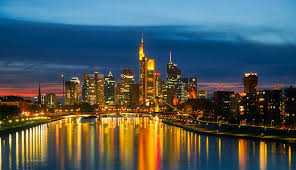
Frankfurt am Main: Up, up and away? That might seem the most obvious thing to do in the city with the biggest airport in Germany. But if you turn your back on Frankfurt am Main too hastily, you will be doing the city an injustice. The fact is that 'Mainhattan' has a huge amount to offer its guests. The banking city with its many museums is an internationally renowned city of culture. And the diversity of its night life ranges from cosy apple-wine pubs to alternative punk dives.


Ramsau: The town in eighth place on Tripadvisor's ranking of Germany's most popular tourist destinations shows that tourists are not only attracted to the big cities in Germany.  The small town of Ramsau in Berchtesgadener Land has barely 2,000 inhabitants, but it offers impressions of a Germany straight out of a picture book: spectacular mountain scenery, fathomless lakes, deep forests and pastures resplendent with wildflowers. No other place can match its recreational value for skiers and snowboarders, hikers, mountain bikers, and climbers.


Oberwesel: Surprisingly, Oberwesel has also made it into the top ten. Ober-where? Yes, the romantic town with its 3,000 inhabitants in the Upper Middle Rhine Valley – a UNESCO World Heritage Site – is a real insider tip. The question is for how long? After all, the mediaeval flair within the beautifully preserved city walls, parts of which can be explored, has catapulted the town in Rhineland-Palatinate to ninth place. Partly because, perhaps, physical activities in the popular hiking region are more often than not rewarded with a wine-tasting session.


Source of this information:
This Blog is all about European Countries Education, Tourist places, Sports, and culture.

Passports and visas related Information: 
Foreigners need a valid passport or passport replacement documents to enter Germany. A valid identity card is sufficient for nationals of most West-European states. As a rule, children require their own travel documents. Citizens of certain countries require a visa to enter Germany. German diplomatic missions (embassies and consulates) provide more information. 
For more information visit the following link:

Travel by Air: 
Germany is served by more than 100 international airlines. The global route network links 22 international airports in Germany with all regions of the world. The largest airports are in Frankfurt am Main, Munich, and Düsseldorf. All airports have good links to the respective transport network. 
For more information visit the following link:


Travel by Rail: 
Germany has an extensive rail network of a good 33,000 kilometers of track. Long-distance and local transport systems are well coordinated and offer good connections. Every day there are more than 250 direct connections from Germany to around 120 European cities.
For more information visit the following link:

Travel by Bus: 
Long-distance coaches are likewise a good way to travel around Germany. There are now more than 250 long-distance bus lines. Inter-city options are particularly numerous, with coaches serving every major German city. There are even stops for long-distance coaches in some towns with less than 10,000 inhabitants. Eight large providers compete for customers in Germany. For information on connections.
For more information visit the following link:

Travel by Car: 
Germany has an ultra-modern road network. Over 700 service stations, petrol stations, motels and snack stands are open around the clock on the approx. 13,000 kilometer-long motorway network. The following unleaded fuel types are available at petrol stations: Super (95 octane), Super E10 (95 octane), Super Plus (98 octane), and diesel. There is no speed limit on German motorways unless speed limit signs dictate otherwise, but a general recommended the speed of 130km/h is in place. In built-up areas the speed limit is 50km/h, and outside such areas 100km/h. There are no motorway tolls. It is compulsory to wear seat belts and children under 150 cm in height must use child seats. Emergency or breakdown services can be requested using SOS telephones found along the motorways. The major automobile clubs (ADAC, AvD) provide information for car tourists.
For more information visit the following link:


Accommodation/Stay in Germany: 
All categories of accommodation are available, from private rooms to holiday homes to luxury hotels. Standards are set and are monitored also in the lower price classes. Tourism associations and tourist offices provide special accommodation directories.
For more information visit the following link:

Youth hostels in Germany: 
More than 500 youth hostels in Germany are open to members of every youth hostel association belonging to Hostelling International. An international membership card is available for a fee. 
For more information visit the following link:

Money and currency: Legal tender is the Euro (1 Euro = 100 cents). Cash is available around the clock from cash machines using an EC card or international credit card; all major credit cards are accepted. Stated prices are inclusive of charges.


Source of this Information:
This Blog is all about European Countries Education, Tourist places, Sports, and culture.
Germany has long enjoyed a fantastic reputation for its excellent education system, in addition to a strong labor market. The country, although well-known for its engineering and manufacturing tradition, is also a hub for scientific, medical, social and artistic research. The research infrastructure in Germany is second-to-none (Germany having produced over 100 Nobel prize-winners over the years!). On average, 25,000 doctoral candidates a year earn their Ph.D. in Germany, making it one of the top countries in Europe for doctoral training. As well as strong links to industry, every major city you can think of has at least one top university in international rankings. Many of the newer higher education institutions in Germany have climbed to the top in no time at all, demonstrating the strength of the German system. The number of foreign students registered for a Ph.D. has more than doubled in the last 12 years to just over 18,000.


German University System: There are mainly two types of higher education institutions in Germany-

a. Universities (including Technische Universität, also known as TU) are research-oriented and offer a wide variety of subjects. These can award doctorate degrees.

b. Fachhochschulen on the other hand, are practice-oriented and offer courses mainly in engineering, business administration, social sciences, and design. They do not award doctorates.

Germany is also home to a number of prestigious research institutions, such as EMBL, which do not have degree-awarding powers but host doctoral students for the major part of their doctorates. These students are jointly-supervised by a professor in a university (in Germany or abroad) from which the Ph.D. will be awarded. As in many countries, the aim of the doctorate is to draw up and publish a written doctoral thesis/dissertation. The award of Ph.D. is based on examination of the thesis (which must be published within regulations specific to each university) and by an oral examination.

Types of Ph.D. in Germany: Ph.D. students in Germany are most often referred to as Doctoral Candidates. There are two types of PhDs in Germany:

1. The traditional approach: The traditional approach involves identifying a supervisor at a German university who is willing to guide your research. This system offers a lot of flexibility since there is no compulsory attendance, deadlines or curriculum, but requires a great deal of dedication. The average length of this kind of Ph.D. is 4 years.

2. Structured doctoral programmes: Structured doctoral programmes are internationally-oriented, conducted largely in English and are comparable to Ph.D. programmes offered in Doctoral Training Centres in the UK for example. Doctoral candidates work individually and also in wider research projects. Structured graduate courses and transferable skills training are an essential part of these programmes which normally lead to a Ph.D. in about 3 years.

According to the German Council of Science and Humanities, the majority of doctoral candidates still complete a traditional doctorate but a growing proportion chooses structured programmes, especially in the natural sciences and mathematics.

Ph.D. Funding / Fees: As a doctoral student, you do not have to pay tuition fees, but you will be asked to pay an administrative fee called Semesterbeitrag (special semester contribution) of 50-250 euros depending on the institution. This covers costs for services such as student governance, public transport, and Studentenwerk (student services). Health insurance is also required and if you are self-funded you will have to pay for it yourself.


Students completing a traditional doctorate with a supervisor will often have to raise the necessary funds themselves. Teaching appointments can provide part of a doctoral candidate's income. Other financing options include scholarships. The supervisor may nominate the doctoral candidate forward for a grant, for example from the Studienstiftung des Deutschen Volkes (German National Academic Foundation).
Ph.D. candidates can also apply for a scholarship themselves. Deutscher Akademischer Austausch Dienst (DAAD, the German Academic Exchange Service) sponsors doctoral candidates from abroad. DAAD offices in the country (for example in India) will provide information on available sponsorship schemes. Depending on the subject, there are also numerous organizations in Germany that award individual grants. These include Federal states, foundations, religious organizations or foundations associated with political parties. Funding periods and eligibility criteria will vary but may include allowances for the language course, families with children as well as research travel costs.
In addition to scholarships or academic employment, doctoral candidates also have the option of financing their living costs with part-time jobs. If you are a non-EU citizen, you must make sure that your residence permit allows you to undertake paid work. For students taking a structured doctoral degree course or attending a graduate school, financing is a different matter. Candidates interested in one of the structured programmes should include an application for funding when applying for the graduate programme; if they are accepted, funding is then already secured and students can expect a monthly allowance of 1,000 - 1,400 euros.

A Step-by-Step Guide to Applying for A Ph.D. in Germany:
There is no national or federal structure to apply for doctoral studies in Germany and you will have to apply to individual institutions directly.

Step 1: Find a supervisor or a structured programme:  If you decide to apply for a traditional Ph.D., you should contact potential supervisors directly and send a brief and well-structured outline of your proposed Ph.D. project. You should allow plenty of time before the intended start of your Ph.D. If you are planning to apply for a structured Ph.D. programme, you should contact the selected university and complete the application procedure, as instructed and within the deadline.

Step 2: Admission procedures: Once you have a letter of acceptance from your supervisor or a confirmation of admission on a structured programme, you should apply for formal admissions. These vary depending on the institution. At this stage, the relevant department or doctoral committee must confirm your eligibility as a doctoral candidate. This usually involves completing an application that includes a statement by your doctoral supervisor, certified copies of certificates and the university degree that entitles you to engage in doctoral study.


Step 3. Enrolment: Your next step is to enroll. There are several advantages to enrolling as a doctoral candidate, for instance, securing better legal status as a foreign resident. To be eligible for enrolment, the university must first accept your application for doctoral studies. However, not all departments require doctoral candidates to officially enroll at the university and this will be stipulated in the doctoral regulations of your institution.

Ph.D. Entry Requirements : 
In Germany, every university/study programme has its own set of entry requirements. As a general rule, however, a qualification equivalent to a German master or magister is required for admissions to Ph.D. studies. Each university is responsible for decisions on the admission of doctoral students and the accreditation of qualifications. Exceptionally well-qualified international applicants might be admitted as doctoral students with a Bachelor degree (fast-track programme). Usually, an examination will then be required. Some universities may ask for proof of English language proficiency, for example by requesting TOEFL or IELTS scores, while universities will ask for very good German language skills if your thesis is to be written in German. In such cases, your knowledge of German needs to be certified through examinations like the TestDaF or DSH.


Source of this information: