Articles by "Poland"
Showing posts with label Poland. Show all posts
This Blog is all about European Countries Education, Tourist places, Sports, and culture.


Polish women are good-natured, kind, cute, communicative, sometimes even with a glib tongue. Their beauty is genetic because since childhood they were taught to show themselves to the society. These girls are thin, vulnerable, sensual and feminine. The woman in this country is stylish all the time. She will never dress incongruous outfit, no matter how fashionable it is. And even the simplest clothes she would wear with incredible elegance. Almost no one girl will go out without makeup. 


There is the strong patriarchal, religious traditions, special social culture in Poland. Polish women are sociable, easy getting the contact directly in the manifestation of their emotions. Most polish people may twice in a day or more go to the church, pray, kneel. In contrast to western society, the Poles really appreciate females, who are able to keep the household, cook well, raise children and be worthy wives. A good wife should be able to create a warm atmosphere in the house, the comfort of home, harmony, and tranquility. In addition, the wife should appreciate the man and his work, take care of his mental state, constantly give the feeling of how much she needs her husband and how important he is for her, praise and pamper him. This is a huge plus of polish women. 


Most Beautiful Polish Women

1. Izabella Scorupco (4 June 1970) 


Scorupco was born to Lech and Magdalena Skorupko in Białystok, Poland, in 1970. When she was one year old, her parents separated, and she remained with her mother. In 1978, they moved to Bredäng in Stockholm, Sweden, where Scorupco learned to speak Swedish, English, and French.

2. Monika 'Jac' Jagaciak (15 January 1994) 

Jagaciak's modeling career began in 2007 after she was encouraged by her sister to attend an open casting of GAGA Models Agency at a shopping center in Poland. She was then picked up by IMG who signed her and in July 2007 she appeared on the cover of French Jalouse. Her big break came at age 13 when Jagaciak went on to land a Hermes campaign for the Fall/Winter 2007 season alongside Daria Werbowy, beating out 600 other candidates while still in primary school. 

3. Magdalena Mielcarz (3 March 1978) 


Magdalena Mielcarz is a Polish actress, model, and singer. She holds a master's degree in Journalism and Political Science from the University of Warsaw. She graduated from Maggie Flanigan Drama Studio in New York. She currently lives in Los Angeles, California. As a model, she appeared in numerous covers of magazines like ELLE, Cosmopolitan, InStyle, Glamour and worked with designers like Valentino, Missoni. She was the first Polish woman in history to have ever signed a contract with prestigious cosmetic brand L'Oréal.

4. Anna Maria Jagodzinska (12 September 1987) 


Jagodzińska was born September 12, 1987, in Sierpc, Poland. She signed with NEXT Model Management in 2003 and made her runway debut at Pringle of Scotland's Fall 2003 show. Later that year, she moved to New York City. During Spring 2004 fashion weeks (September 2003), she modeled for DKNY and Marc by Marc Jacobs. Her breakthrough year was 2004; she walked for Alexander McQueen, Burberry, Chanel, Marni, and Prada during Fall 2004 fashion weeks. That year, she also appeared in editorials in W, Vogue Italia, and i-D, and modeled in advertisements for BCBG Max Azria, Moschino Cheap & Chic, and Pollini.


5. Aleksandra Hamkalo (7 June 1988) 


Polish women are self-confident: 81% of them consider themselves to be extremely attractive. Presumably, with the help of the golden-haired genes, their grandmothers easily captivated the kings and emperors. These girls are too ambitious, sometimes even excessively. 

They follow the world trend in hairstyles, prefer natural colors and natural forms. The image of the contemporary polish women suggests a neat haircut, fresh-washed hair and a small amount of hair. Polish women dress up the bulk of flashy, preferring comfortable everyday things. Young pretty girls like shapeless clothing of sports type that hides all the advantages of a female figure (however, disadvantages, too). Apparently, in this respect, Poland is trying to be like their western neighbors.


Source of this Information:
This Blog is all about European Countries Education, Tourist places, Sports, and culture.

Life has not been easy for Poland, an eastern European country that has been invaded and destroyed many times over the centuries. The country suffered mightily in World War II when many of its citizens, including its large Jewish population, were hustled off to Nazi concentration camps. The Polish spirit, however, refused to die and today the country combines medieval architecture with lively cultural activities to meet the needs of modern tourists. An overview of the best places to visit in Poland.


Best Places to Visit in Poland

1. Krakow: Krakow might be described as a rag to riches city since it went from being a seventh-century village to the second most important city in Poland, is known for its cultural, artistic, academic and economic activities. During World War II, the Nazis herded Jews into the Krakow Ghetto where they were later sent to concentration camps; the movie Schindler’s List centered around one man’s efforts to save the ghetto residents from extermination. Located on the Vistula River, this former Polish capital is easy to get around, since attractions radiate out from Old Town, considered the best Old Town in the country.


2. Warsaw: The capital of Poland might aptly be compared to a Phoenix rising from the ashes. Founded around the 12th century, Warsaw was pretty much destroyed during World War II but has rebuilt itself into a thriving historical and cultural center, complete with a restored Old Town. Once known as the “Paris of the North,” it also is famous as the home of classical composer Fryderyk Chopin. Travelers of all ages will enjoy a visit to the Copernicus Science Center where hands-on activities abound.


3. Gdansk: Gdansk is the largest city in northern Poland and its main seaport since it lies on the Baltic Sea. Founded around the 10th century, it has a mixed political history; at different times it belonged to Germany and Poland and was a free state before permanently becoming a part of Poland after World War II. The city rebuilt itself after the war, restoring its Old Town, which is famous for the Royal Road that Polish kings traveled on when visiting this historical city. The city also is home to St. Mary Church, the largest brick church in the world.


4. Wroclaw:  Located on the Oder River, Wroclaw is the largest city in western Poland. Over the centuries it has been governed by Prussia, Poland, Germany, and Bohemia, but has been part of Poland since 1945. The former capital of Silesia is still less well-known as some of the other places to visit in Poland but can definitely compete when it comes to amazing architecture. Main attractions include the market square and the impressive Old Town Hall, St, Elizabeth’s Church with its observation deck overlooking the city, and the largest zoo in Poland. Sailing on the Oder River is a relaxing way to get a feel for this medieval city.


5. Poznan: Student travelers wanting to meet their Polish peers might want to visit Poznan, long known as an academic center and home to Poland’s third largest university. The city hosts many international events, including the Malta International Theatre Festival that takes place every summer. Major sites are easily accessible by strolling the Royal-Imperial Route, a walk set up especially for tourists. Athletes may enjoy a visit to the artificial lake of Malta, home to a ski slope, ice rink, and swimming pools.


6. Tatra National Park: Travelers who crave scenic beauty will find it in Tatra National Park, located in southcentral Poland. Established in 1954, the park is mainly forests, meadows and numerous rock formations covering the Tatra Mountains. Spelunkers may enjoy touring six of the park’s 650 caves that are open to the public. The park also offers more than 30 alpine lakes as well as the Wielka Siklawa waterfall that is 70 meters (230 feet) high. Tatra, the most visited national park in Poland, will delight hikers with its 270 km (170 miles) of trails. There is a similar national park in the neighboring part of Slovakia, also called the Tatra National Park.


7. Torun: Torun, located on the Vistula River, is best known, perhaps, as the birthplace of Copernicus, but it’s just as well known for its old marketplace and Gothic town hall that the National Geographic Polska put on its list of the 30 most beautiful places in the world. As Torun escaped bombing during World War II, the city still boasts numerous buildings that date back to the Middle Ages. Construction on the town hall started in the 13th century, with many churches, including the Cathedral of SS. John the Evangelist and John the Baptist, dating back to the 14th century. This church is a must-see for travelers interested in Gothic paintings and sculptures, and Baroque altars.


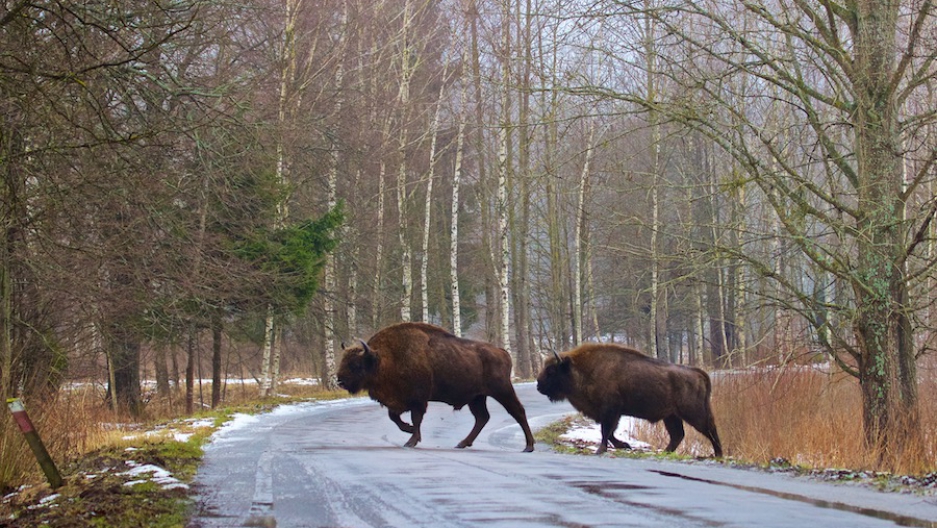
8. Bialowieza Forest: The Bialowieza Forest is a large remnant of the primeval forests that once covered much of Europe. The forest straddles the border between Poland and the Republic of Belarus, and there are border crossings for tourists on foot or on bicycles. The Bialowieza Forest is the only place where European Bison still remain free and living in the forest as they once did throughout Europe. Wolves, Lynx, Red Deer, Wild Boar, Elk and Roe Deer are among its other inhabitants. While the bison are kept within fenced areas, guided tours are available either on foot or in horse-drawn carriages.


9. Lublin: It is located east of the Vistula, is another ancient city with a marketplace that may have dated back to the sixth century. Because it is located on Poland’s eastern border, it became, early on, a line of defense against various invaders that destroyed the city over the centuries. It also was home to one of the largest Jewish communities in Poland. Evidence of Lublin connecting Western and Eastern cultures can be found at the Holy Trinity Chapel that blends Catholic and Russian-Byzantine styles. But don’t be fooled by the cobblestone streets and medieval architecture of the Old Town, as it boasts lively art and nightclub scene.


10. Malbork: The medieval town of Malbork, perhaps better known by the German name of Marienburg, is most well-known for its castle, which was ordered built in the 13th century by the Knights of the Teutonic Order as their headquarters, Europe’s largest Gothic fortress is named after the Virgin Mary, the patron saint of the city and castle. The castle is actually three castles, making it the world’s largest brick castle. It took 230 years to build the castle, a majority of which was destroyed during World War II. Much of the castle has been restored since then.


Source of this information:
This Blog is all about European Countries Education, Tourist places, Sports, and culture.
Torun, one of the oldest cities in Poland, is largely known for two things: Nicolas Copernicus and gingerbread but there is plenty more to do and see in this lovely medieval town. The city earned the UNESCO status for its preserved street pattern and well maintained 13th-century brick buildings. The old city center makes a perfect spot for people watching and relaxing with a cup of coffee or glass of wine. The mix of culture, science, architecture and amazing history attracts thousands of tourists every year. If you want to spend your weekend somewhere amazing Torun is definitely worth your consideration.


Things to do and see in Torun:

1. Town square & old city center:
Imagine seating in the middle of a lovely medieval old town, surrounded by beautiful buildings and vibrant cafes, bars and restaurants. You can relax completely and immerse in the Torun’s atmosphere or be a bit more adventurous and climb about 180 steps to the top of the Town Hall Tower and see the city from the above. The city center it’s quite compact, but the side streets hide many exciting buildings and monuments so you will need at least 2-3 hours to fully experience the old town. If you love your coffee and snacks you may need the whole afternoon. Either way, it’s going to be time well spent.


2. Medieval Defensive City Walls:
First of all, to explore this attraction wear comfortable shoes as most streets are paved in cobble stones (which itself is a medieval feature!). Take a stroll through the Old Town’s narrow streets and admire the defense walls that deterred the enemy from conquering the city and protected Torun for centuries. This activity is especially enjoyable at night when the buildings are nicely lit.


3. Bunker: 
Prepare yourself for something different but only if you have a sense of fun and adventure. If ever wondered how people felt during II WW this is your chance to explore it on your own skin. Yes, it does involve going into a bunker and yes it’s going to be scary. It’s quick and fun activity, but not for the faint-hearted.


4. Cultural Centre “Teutonic castle”:
From the outside, it may seem that there is not much remaining of the castle, but don’t be deceived by the looks! The castle is larger than it first appears and there are “underground” rooms and an upstairs gallery.
The history of the castle and its Knights is shown in the underground chamber in the form of a film (in Polish with English subtitles). It is a must-see attraction.


5. Town Hall Tower building:
If you are looking for a nice view over the old town the Town Hall Tower building is your best bet. A word of warning, you will have to climb 187 steps of this impressive 14th-century building, but it’s absolutely worth it. Once you get to the top spend some time to look at the fine brickwork and beautiful stained glass windows. And if you can’t be bothered to go to the top just stay outside and admire the building itself, it looks equally good in the day and illuminated at night.


6. The leaning tower:
The Leaning Tower is one of many architectural delights that can be spotted during a walk in the medieval part of the city. The building has a long and interesting history. It was built as part of the defensive city walls to be later used as women’s prison and at some point, it became a… shop. Now it’s one of the main city landmarks, visited by thousands of tourists a year. So why go to Pisa when there is a perfectly good leading Tower in Torun?


7. Monastery Gate (Brama Klasztorna):
The Monastery Gate is your chance to see well maintained an impressive entry to the old town. For many, it’s just a gate but it is also one of the main landmarks of Torun and it doesn’t take much time or effort to see it. While you are taking a walk by the Vistula river watch the city walls and you will be able to spot the gate with no problem. Take a picture, walk through it and move on.


8. Cathedral of St. John the Baptist and St. John the Evangelist:
Even if you are not religious the Cathedral of St. John the Baptist and St. John the Evangelist is a place worth visiting for its architecture and beauty. This is a magnificent house of worship with a number of altars and works of art. It’s possible to club the tower and photography is permitted.


9. Esken Family House – Torun History Museum:
If you are going to visit just one museum in Torun this should be on top of your list. Torun History Museum covers the past of the city and surrounding area from the earliest days to the modern times in visual presentations, artifacts and films. There are multiple different exhibits with Polish, English and German captions and audio-visuals. The museum is perhaps better suited to adults, but children can also find something for themselves as there is a special room where they can build houses of different epochs and enjoy opening drawers to find household artifacts from various eras.


10. House of Nicolas Copernicus Museum:
House of Nicolas Copernicus Museum is the actual place where Nicolas Copernicus was born. Nowadays this beautiful building is a reconstruction of a medieval house of Copernicus’s days. If you are a fan or a student of science, mathematics or history you should definitely visit this museum. If not, then perhaps you may find this attraction quite boring. In the end, it is just a period house that happens to be the place of birth one of the most famous astronomers of all times.


Source of this information is:
This Blog is all about European Countries Education, Tourist places, Sports, and culture.
We do not force you to apply for Polish citizenship, but if you decide to stay here for a long time, probably we do not have to. If you feel “polished” enough, let us help you with this one. Below, you will find all the information regarding becoming a citizen. Right here, right now.


Polish citizenship can be acquired in the following ways:
We probably should explain all of the listed ways in some pleasant manner to make them more understandable, shouldn’t we? So let’s get to the point.

1. The acquisition by law: According to the law, if your mother or your father holds Polish citizenship, you get one as well. If your parents are unknown or don’t have any citizenship and by any chance, you were found or born on the territory of the Republic of Poland – the rule stays the same. A child adopted by a person that is a holder of Polish citizenship acquires it as well, but only if the adoption process had been completed before the child turned 16. As a result, the child is considered to possess a Polish citizenship from the very start of their life.


2. The recognition as a Polish citizen: The recognition is always at the request of a foreigner or at the request of their legal representatives in case they are not adult yet. There are many ways to be recognized as a Polish citizen and by saying “many ways” we really mean it.
a. You have to live continuously in Poland for at least 3 years, your stay is based on an establishment permit, an EC residence permit if you are considered as a long-term resident or based on a permanent residence permit – by that we mean having a regular income in Poland. Legal income.
b. You have to live continuously in Poland for at least 2 years but first, you have to find a lovely person you want to marry (and wants to marry you!) and you have to remain in that state for at least 3 years.
c. You have to live continuously in Poland for at least 2 years and you have to hold a refugee status granted by the Republic of Poland.
d. You are a foreign minor, and one of your parents residing in the territory of Poland holds Polish citizenship.
e. You have lived here for at least 10 years continuously and legally in the territory of the Republic of Poland, your stay is based on an establishment permit, an EC residence permit if you are considered as a long-term resident and you have a stable and regular income within the Republic of Poland as well as a legal title to the occupied living premises.
f. You have lived here for at least 2 years and you have just found out that you have some Polish origin you’ve always dreamed of.


3. The granting of Polish citizenship: If the President of the Republic of Poland really likes you or thinks you deserve Polish citizenship for whatever the reason is, the only thing you have to do is to submit a written request, or make your legal representatives to do it if you are a minor. As soon as the President signs the papers, the citizenship is acquired.

4. The restoration of Polish citizenship: What’s important, the procedure of the restoration of Polish citizenship only applies to you if you’ve lost it before the 1st of January 1999. The first thing you have to do is to fill out the application form which can be found here.
You also have to attach a couple of documents to the filled out application form:
a. Documents proving identity and citizenship.
b. Evidence of change in name, if this occurred.
c.The documents proving the loss of Polish citizenship.
d. Photograph of the applicant (it’s probably you).

When you’re done, simply send the form to the Ministry of Internal Affairs or deliver it to the Consulate of Poland if you’re abroad and wait for the good news.


Source of this information :
This Blog is all about European Countries Education, Tourist places, Sports, and culture.
Sports participation in Poland is on the rise with a range of sports growing faster in Poland then some of the more traditional western European country's. Numerous sports are popular in Poland. Football ( soccer ) is the country's most popular sport, with a rich history of global competitiveness. Track and field, basketball, boxing, ski jumping, fencing, handball, cycling, ice hockey, swimming, volleyball, winter sports, weightlifting and Bodybuilding are notable other sports popular in Poland.


The golden era of football in Poland took place throughout the 1970s together with until the early 1980s, when the Polish national football team accomplished their best results in any FIFA World Cup competitions achieving third place in the 1974 and 1982 World Cups. The team won a gold medal in football at the 1972 Summer Olympics as well as winning 2 silver medals in 1976 and 1992. Poland, together with Ukraine hosted the UEFA European Football Championship in 2012. Polish football players are prominent in the Bundesliga as well as the premiership with 3 polish players Lucasz Piszczek, Jakub Blaszczykowski and Robert Lewandowski an integral part of German club Dortmund runner-up place in Europes champions league in 2013. Robert Lewandowski is one of the most sorts after strikers in Europe with him just agreeing with terms to join Europes leading club Bayern Munich for the 2014/2015 season.


The Polish men's national volleyball team is ranked 3rd worldwide and the women's volleyball team is ranked 13th. Mariusz Pudzianowski is an extremely successful strongman competitor and has won more World's Strongest Man titles than any other competitor on the planet, winning the event in 2008 for the 5th time. The first Polish Formula One driver, Robert Kubica, until recently was considered the most naturally gifted F1 driver and has brought awareness of Formula One Racing to Poland. Poland has developed a long, proud history in motorcycle speedway racing and in recent times Poland’s Tomasz Gollob has been a world-leading rider. The national speedway team of Poland is one of the major teams in international speedway and is very successful in numerous competitions. The Polish mountains are the perfect location for hiking, winter sports and mountain biking and attract millions of tourists each year from all over the world. Baltic beaches and resorts are popular locations for fishing, canoeing, kayaking and a broad range of other water-themed sports.


At the London Summer Olympics of 2012, Poland won 10 medals with 2 Golds in Mens shot put and Weightlifting. At the 2014 Winter Olympics in Sochi, Russia Poland won 6 medals with 4 gold medals, Poland was 11th overall in the medals table. Increasingly, sports such as road/track cycling, mountain biking, rugby, tennis, golf & rowing are becoming more popular.

The most popular sports in Poland:
1) Football (Soccer)
2) Basketball
3) Motor Sports
4) Gym/Fitness
6) Boxing
7) Tennis
8) Table Tennis
9) Cycling
10) Cue Sports


For more information visit the following Web sites:

This Blog is all about European Countries Education, Tourist places, Sports, and culture.


1. The name "Poland" originates from the name of the tribe "Polanie" which means "people living in open fields".

2. Poland has 120,562 square miles (312,255 km2) of the area, which makes the country slightly smaller than New Mexico.

3. Poland joined NATO in 1999 and the European Union in 2004.

4. Poles are well educated and about 90% of Poland's youths complete secondary education and 50% have an academic degree.

5. Poland held its first free elections in more than 40 years in 1989.

6. Poland boasts 17 Nobel prize winners, including four Peace Prizes and five in Literature.

7. Polish has the second largest number of speakers among the Slavic languages after Russian.

8. The Fiat was the first mass-produced car in Poland and 10,000 were sold before the eve of WWII.

9. The biggest section of any grocery store in Poland is the candy section.

10. The Polish alphabet consists of 32 letters.

11. A popular drink in Poland, orangeade or oranzada, is a sweet carbonated drink with an orange taste that originated in France. 

12. Poland is home to one of Europe’s great lake districts.

13. Germany and Poland are pretty good friends these days.

14. Beer is often served with raspberry or blackcurrant juice and drunk using a straw.

15. Poles love their cold cut and Polish butcher shops or "sklep miesny" are known for their enormous selection.

16. Poland is largely ethnically homogeneous with minorities including Ukrainian, Belorussian, Slovakian, Lithuanian and Germans.

17. Poland has 120,562 square miles (312,255 km2) of the area, which makes the country slightly smaller than New Mexico.

18. The Polish flag has two equal horizontal bands of white (top) and red; the colors derive from the Polish emblem, which is a white eagle on a red field.

19. The last Polish monarch, Stanisław Poniatowski, died in prison in 1798 in St. Petersburg, Russia.

20. Poland was the only European country which never officially collaborated with the Nazis at any level, and no Polish units fought alongside the Nazi army.

21. Napoleon Bonaparte met the Polish elite and his future mistress, Countess Maria Waleska, in the ballroom of Warsaw’s Zamek Królewski (Royal Castle) in 1806.

22. Marie Curie (Manya Sklodowska) was born in Warsaw (Warszawa), Poland, on November 7, 1867. She moved to Paris in early 1880 and married Frenchman Pierre Curie in 1895. 

23. Polish-born Michael Marks arrived in Britain in the 1880s, fleeing persecution of the Jews in Russian-controlled Poland.

24. The highest mountain in Australia, Mount Kosciuszko, was named after Polish General Tadeusz Kościuszko, who fought against the Russian Empire as well as in the American Revolutionary War.

25. Poles drink, on average, 92 liters of beer a year, which places Poland third in consumption in Europe behind Germany and the Czech Republic.

26. Pierogi, or Polish dumplings, are one of the most recognizable Polish dishes outside of Poland.

27. Poland has a history of producing high-quality vodka for more than 500 years.

28. Roman Catholicism is so popular in Poland that there is a television channel dedicated to the pope.

29. The first Olympic medal in winter sports won by a Polish national was a bronze won by skier Franciszek Gąsienica Groń in 1956.

30. Polish astronomer Johannes Hevelius published the earliest exact maps of the moon.